 |
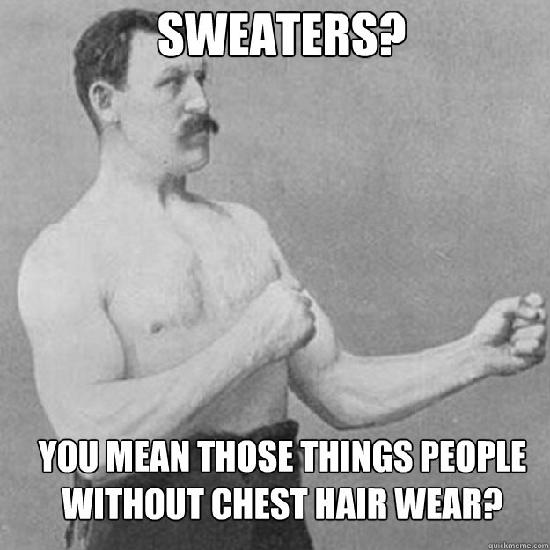
| "Hair is the key to being a man"-Ancient chinese proverb(probably?) (this image) |
When considering the values of manhood in modern times to those portrayed in Macbeth it seems that in modern society people are often more accepting of a male as a "man" even if he does not possess unrelenting strength or outstanding durability, however in Macbeth, Shakespeare portrays Lady Macbeth's desire for a masculine body and specifically outlines certain features of manliness that are desirable during that times ,"unsex me here...Come to my woman's breasts,And take my milk for gall" (Shakespeare 391-398). In Lady Macbeth's statement, she pleaded with the witches to take her womanly parts away, as they might resemble weakness, and to give her manly parts instead; the simple quote of "unsex me," (Shakespeare 391) is sufficient enough to explain one of the values of manliness held at this time, which is that the male physique is superior in terms of strength and that it would embody Lady Macbeth's cumbersome ambitions.
Although in modern society the values of manliness can be considered less clear as they were in the seventeenth century, there is still evident societal expectations that seem to favour men acting in certain ways that the values of manliness seem to embody; an example of this is evident in the fact that males hold the highest positions of power and prosperity, and tend to get paid more than their women counterparts, due to this current situations the values of manliness seem to embody that of success and wealth, thus males are often pressured to do well in school and to secure good jobs, however over the centuries the core values of being manly have never changed, they all are related to power, whether it be in forms of physical strength or otherwise. In Macbeth, Macbeth was valued as a noble warrior and thus a "manly man", and as the story progresses he is tempted to fulfill the prophecy of becoming king, which is a position of political power, rather than physical power like that of warriors; in todays society power is still the determinant of being a man, however today power is mostly measured in terms of wealth, and political decisiveness.
------------------------------>
------------------------------>
------------------------------>
Other than power, behavior is also an important value of manliness, in modern times the stereotypical man is shown as rational, emotionless, and ruthless, and ambitious, while a woman, is shown to possess qualities that are contrary to those of man, in which she is shown to be emotional, empathetic, passive. in Macbeth these qualities are reversed which is something not characteristic of Shakespeare's time; Lady Macbeth is shown as rational, ambitious, ruthless, mentally strong, yet she possess a woman's body, while Macbeth is shown as indecisive, afraid, empathetic, and mentally conflicted, yet he is male with alot of power. Lady Macbeth tells Macbeth "Art thou afeard To be the same in thine own act and valour As thou art in desire?Wouldst thou have that Which thou esteem'st the ornament of life,"( Shakespeare 516-519), this statement embodies the societal expectations of men during Shakespeare's time, in which men are expected to show valour and are expected to act upon their desires and decisions, thus if Macbeth had wanted to kill King Duncan then he should act upon his desire use his manly power to accomplish his task; this statement also reveals lady Macbeths strong decisive nature and her utilitarianistic nature, which are characteristics commonly associated with men.
To understand what it takes to be a good man, one must differentiate the qualities of man in terms of good and bad; in this thought process one can say ambition, rationality and decisiveness are quite useful in a pragmatic perspective, while impulsiveness due to testosterone and emotionlessness are not as useful. according to Lady Macbeth a good man is as such, "When you durst do it, then you were a man; And, to be more than what you were, you would Be so much more the man,"(Shakespeare 528-530), thus essentially a good man is one that is not afraid to act upon his decisions, or rather her decisions, and is efficient in this manner, she also exclaims that the fact that one does a manly action, that they become more manly just for the sake of doing the action itself, even if the action is one of murder and could possibly plunge Britain into chaos due to the loss of its king, and quite possibly could have started the bubonic plague wiping one third of europe's population. Thus a good man is one who can work things out efficiently and isn't afraid to act upon his decisions, as well as one who would take the time to understand others , as it often results in less fights and muscle flexing.
Ultimately, the values of manliness in Macbeth are presented two fold, one is a brand of manliness that Lady Macbeth portrays, which is that of decisiveness, rationality, and mental acuity, while macbeth represents the other value which is that of actual power whether that be in a form of physique or political power, as well as the fact that he is actually a male, which is a requirement by the way; in modern times this is hasn't changed significantly except for the fact power and success is more of a value of manliness, than the actual characteristics of a man, whether it be physical or social, although this could be argued since the media usually portrays men as violent and emotionless.
Citation:
Shakespeare, William, Burton Raffel, and Harold Bloom. Macbeth. New Haven: Yale UP, 2005. Print.
 |
| Great Gandalf (This image) |
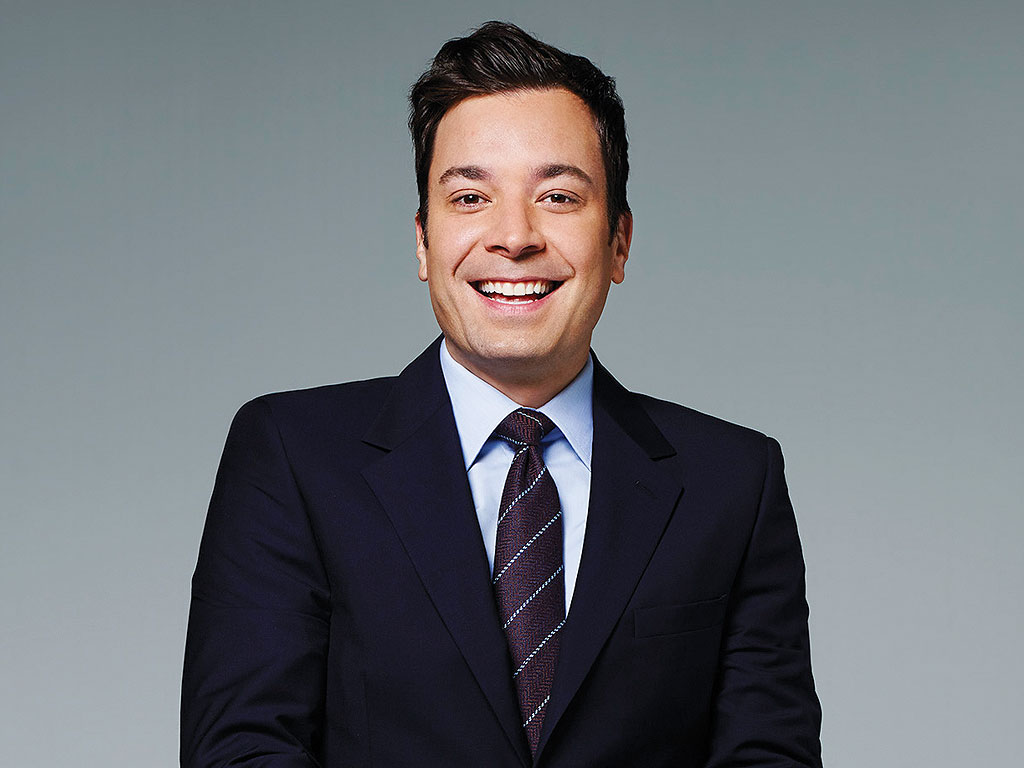 |
| not manly man (this image) |
------------------------------>
------------------------------>
------------------------------>
Other than power, behavior is also an important value of manliness, in modern times the stereotypical man is shown as rational, emotionless, and ruthless, and ambitious, while a woman, is shown to possess qualities that are contrary to those of man, in which she is shown to be emotional, empathetic, passive. in Macbeth these qualities are reversed which is something not characteristic of Shakespeare's time; Lady Macbeth is shown as rational, ambitious, ruthless, mentally strong, yet she possess a woman's body, while Macbeth is shown as indecisive, afraid, empathetic, and mentally conflicted, yet he is male with alot of power. Lady Macbeth tells Macbeth "Art thou afeard To be the same in thine own act and valour As thou art in desire?Wouldst thou have that Which thou esteem'st the ornament of life,"( Shakespeare 516-519), this statement embodies the societal expectations of men during Shakespeare's time, in which men are expected to show valour and are expected to act upon their desires and decisions, thus if Macbeth had wanted to kill King Duncan then he should act upon his desire use his manly power to accomplish his task; this statement also reveals lady Macbeths strong decisive nature and her utilitarianistic nature, which are characteristics commonly associated with men.
To understand what it takes to be a good man, one must differentiate the qualities of man in terms of good and bad; in this thought process one can say ambition, rationality and decisiveness are quite useful in a pragmatic perspective, while impulsiveness due to testosterone and emotionlessness are not as useful. according to Lady Macbeth a good man is as such, "When you durst do it, then you were a man; And, to be more than what you were, you would Be so much more the man,"(Shakespeare 528-530), thus essentially a good man is one that is not afraid to act upon his decisions, or rather her decisions, and is efficient in this manner, she also exclaims that the fact that one does a manly action, that they become more manly just for the sake of doing the action itself, even if the action is one of murder and could possibly plunge Britain into chaos due to the loss of its king, and quite possibly could have started the bubonic plague wiping one third of europe's population. Thus a good man is one who can work things out efficiently and isn't afraid to act upon his decisions, as well as one who would take the time to understand others , as it often results in less fights and muscle flexing.
Ultimately, the values of manliness in Macbeth are presented two fold, one is a brand of manliness that Lady Macbeth portrays, which is that of decisiveness, rationality, and mental acuity, while macbeth represents the other value which is that of actual power whether that be in a form of physique or political power, as well as the fact that he is actually a male, which is a requirement by the way; in modern times this is hasn't changed significantly except for the fact power and success is more of a value of manliness, than the actual characteristics of a man, whether it be physical or social, although this could be argued since the media usually portrays men as violent and emotionless.
Citation:
Shakespeare, William, Burton Raffel, and Harold Bloom. Macbeth. New Haven: Yale UP, 2005. Print.

By the way watch this great college humor video about what only men can do..... http://www.youtube.com/watch?v=2OujZjrkhBI
ReplyDeleteSuch a great response- I felt as if you really explore the topic and possible arguments. Loved reading it!
ReplyDeleteHey! I was skeptical at first to read and respond to your post because it was really long... lol. I liked it a lot. I liked how you wrote about the how Lady Macbeth held a lot of importance of her physical aspects of womanhood and how that hindered her from being powerful and also how Macbeth was viewed as weak regardless of what manly status he held. I also liked how you talked about the role of media and how it presents manliness.
ReplyDelete