Sunday, December 7, 2014

From Killing Cereal to casting magic Here is Macbeth's top 5 Movies/Shows!!!


So obviously Macbeth is going to have some great shows since he already has a best selling play after him, but what would they be........ I took the liberty of Resurrecting him from the dead and forced him to binge watch Netflix with me and well here is what he suggested:


Number 5: BEOWULF

This may seem like a blast from the past, but the animated Beowulf has allot to say when being compared to Macbeth, In Beowulf the Scandinavian hero fights monsters, makes a secret deal with an Angelina Jolie monster ( this is actually a deviation from the book, if you haven't guessed already), and fights dragons. Macbeth really liked Beowulf, for many reasons, and in both works, both the characters were forced to hide a secret from their closest companions, those being Beowulf having a baby with a demon and Macbeth deceiving others about his murders. Both characters also portray a tragic flaw, those being, arrogance, greed, and just pure bloodlust. The main one is of course arrogance, which Macbeth portrays while fighting Macduff and thinking of himself as invincible, while Beowulf portrayed this during his fight with the dragon( He also screams his name out a lot... and I mean A LOT). This great series really intrigued Macbeth by letting him think back to his barbaric roots, which valued heroism and sea monster slaying; he told that he would give anything if I gave him my Netflix password, which did seem tempting, but then again i wouldn't wanna see my recently watched shows as random Lord of the rings movies.
One might wonder how this even is possible, but then again it is Beowulf..SO...eh source


Number 4: The Walking Dead

I don't know why Macbeth likes this show but he apparently does, besides being possible one of the most overrated shows extant, certain characters and/or characteristics in this show astonishingly resemble Macbeth. The first of which is the aspect of power grabbing; Shane who was the Protagonists friend eventually tried to turn on him in order to consolidate power. The show is set in a post zombie apocalyptic world, where every person is trying to survive, and those that form groups have the best chance of staying alive. This setting is infact very similar to scotland in the twelfth century, in that it was hard to stay fed an alive, however just like Macbeth many characters try to take over certain positions of power by murdering those close to them.Another characters similar to Macbeth is the Governor Philip, pretty much goes insane and kills everyone who opposed him even his own soldiers, which eventually led to his down fall, there were also many characters that abandoned him and joined others in disposing, this is very similar to what happens when the english try to attack Macbeth and to drive him from his thrown, due to his tyranny. Macbeth might wanna choose this since it shows how characters similar to him actually succeed in carrying out their evil plots, and triumphing over good, rather than having themselves decapitated.
The Governor vs Rick
source


Number 3: Kungfu Panda ...just kidding even T can't pull that one off, actually its Merlin

This epic BBC drama was one of Macbeth's all time favorites, since it portrayed the legendary king Arthur as well as Merlin the wizard( except for the fact that it's nothing like Le Morte D'Arthur, and that its from Merlin's perspective). In this drama many scenes take place in Scotland, which is a part of the legendary land of Albion, and the main character Merlin is Prince Arthur's servant that is forced to hide the fact that he is a magician from his master, since magic was outlawed by King Uther. It clearly obvious why Macbeth liked this show, for one it's in Scotland, and secondly it a rises a kind of sick Humor within him, since the main character is a magician who always get beat up, and well lets say that Macbeth isn't the best fan of magic and fate out there, thus he got a couple of weird laughs through the series. However the concept of fate plays huge role in both works in which Merlin's destiny was to let Arthur rise as a powerful, wise, and beneficent ruler, that was also tolerant of magic,, thus Merlin was driven to go to great links to save Arthur as well as train to get stronger. while Macbeth, was eventually driven to kill his friend and begin a reign of great corruption. I guess Macbeth sees a little bit of Merlin within himself.
He is really good at keeping secrets as you can see. source


Number 2: Arrow

This show created by DC Comics to tell the tale of the Green arrow is probably the show that got Macbeth jumping off the couch and shooting arrows at me.In this show Oliver Queen, aka Green Arrow, was an ivy league dropout that crashed on a pacific island and was forced to survive their, and learning great skills, such as those gnarly bow midair shots, and crazy workout. The character that is Oliver Queen greatly intrigued Macbeth since they both had crazy secrets that involved murder,( and yes Green Arrow was a murderer and he killed more people than Macbeth); it was also intriguing that Macbeth seemed to feel  better about himself when he learned the green arrow probably killed a multitude of people, through different crazy methods. Macbeth also seemed to relate to the fact that most of Oliver's words were equivocations, that meant something to the audience and to Oliver, but referred to something completely different to the ignorant party, like Oliver's old girlfriend might ask him about the condition her new boyfriend, who is evil, and Oliver would say that they won't be seeing each other for a long time, which is morbidly funny since he shot the guy in the eye( HA HA HA).Aspects of Masculinity are also heavily portrayed in Arrow, since the character needed to reach a certain point in training(both mentally and physically) in order to be strong enough to escape the island, and Macbeth, seems to like that aspect since he lacked in confidence at first, just like Oliver, who was afraid to kill a bird in order to survive, but later had no problem with taking life.

This guy is literally ripped HAHAHA get it,
cause his skin is ripped... nevermind source

Numbuh one  I mean Number 1: Dexter
This show is my, and Macbeth's, all time favorite. This show tells the story of man who as a child saw his mother killed, and now he is a serial killer. The show is divided into eight seasons in which each season revolves around a specific murder case, with many small murders in between, and the main character Dexter uses his genius skills ( by the way this isn't Dexter laboratory, just clearing any misconceptions) in order to solve the case and then kill the killer, in order to feed his "dark passenger" as he calls it. Macbeth really likes the how Dexter covers up his murders, and the fact that Dexter works at the police department, gives him access to security files, and is less likely to blame, makes it more interesting. The character heavily uses equivocations and talks to himself a lot, in which he sometimes explains the meaning of the equivocations in his head. for example a police officer might say  "well, looks like our chances of catching this killer just drowned," and Dexter would say in his head " ya literally" since he disposes the bodies in the ocean. Macbeth also enjoyed the fact that Dexter, like him, sometimes acts impulsively and does a quick job of killing the killers just when the police arrive at the door. A number of people in the show also suspected Dexter of being "unnaturally weird" and almost figured out his secret, but Dexter takes no chances and disposes of them too in often clever ways, in which he doesn't kill them directly, but rather pins his crimes on them , and then they get killed by the police.This reminded Macbeth of his dear old friend Banquo and and he had a few laughs reminiscing how he got rid of him too. The most important of all however is that they are both Serial Killers (Yeah), and as Dexter defines it "a serial killer is a person that kills more than two people". Macbeth liked the fact that if Dexter was alive at this time that he would have killed him; He told me that it sent shivers down his spine.

HA HA ... Im sure i will Dexter...Im sure i will
source


Sunday, November 16, 2014

SpiderMAN, SuperMAN, BatMAN and the Eternal question of MANHOOD

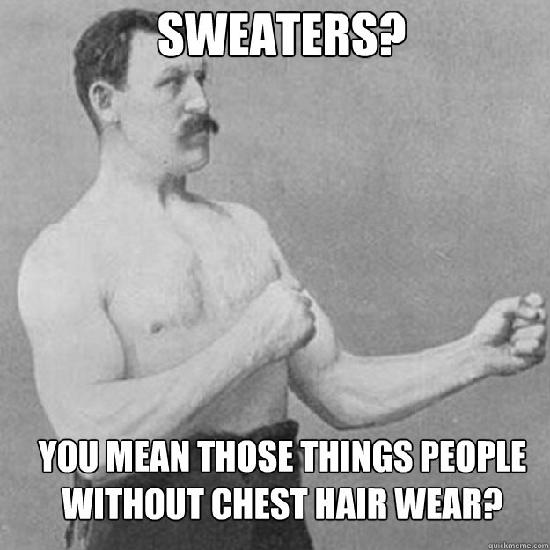
"Hair is the key to being a man"-Ancient chinese proverb(probably?) (this image)


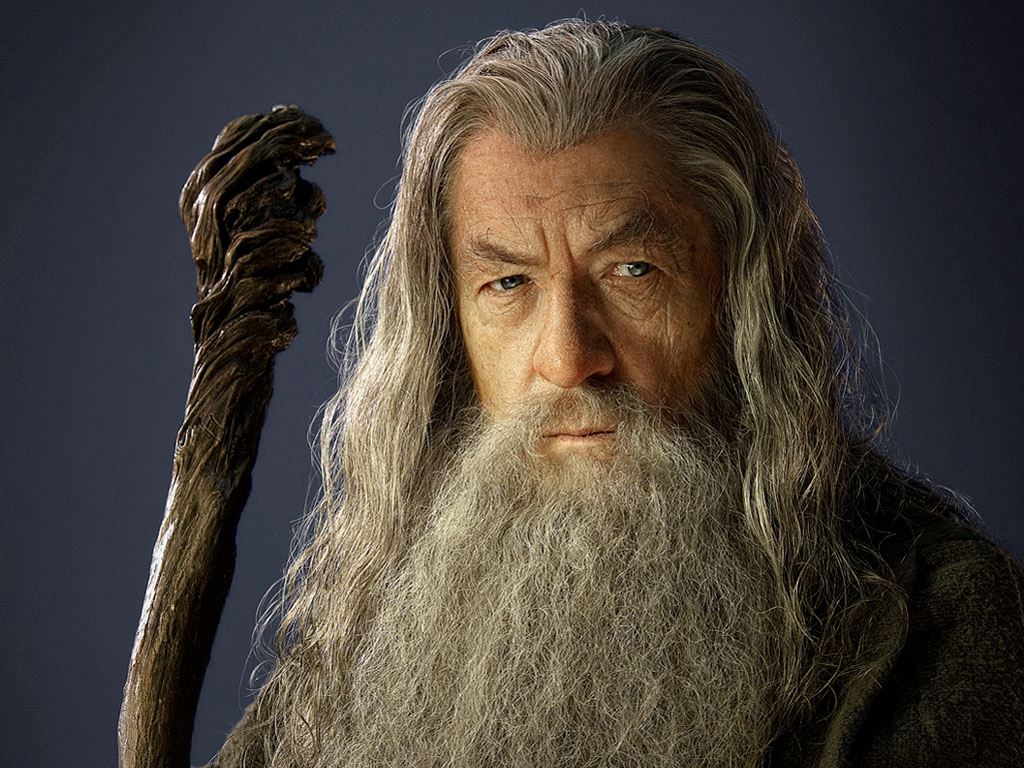
In order for one to answer the inquiry of what differentiates the values of manhood in the modern times from that of the old , one must first examine what is universal about the concept of manliness, and that is the colorful, or colorless, bunch of dead cells that we call hair. Hair on men grows everywhere, whether it be facial or on your chest or on all the other places where it can grow, such as leg hair; it is said that Charles Darwin may have mistaken a native man for the misking link in the evolution of "man" kind.

When considering the values of manhood in modern times to those portrayed in Macbeth it seems that in modern society people are often more accepting of a male as a "man" even if he does not possess unrelenting strength or outstanding durability, however in Macbeth, Shakespeare portrays Lady Macbeth's desire for a masculine body and specifically outlines certain features of manliness that are desirable during that times ,"unsex me here...Come to my woman's breasts,And take my milk for gall" (Shakespeare 391-398). In Lady Macbeth's statement, she pleaded with the witches to take her womanly parts away, as they might resemble weakness, and to give her manly parts instead; the simple quote of "unsex me," (Shakespeare 391) is sufficient enough to explain one of the values of manliness held at this time, which is that the male physique is superior in terms of strength and that it would embody Lady Macbeth's cumbersome ambitions.

Although in modern society the values of manliness can be considered less clear as they were in the seventeenth century, there is still evident societal expectations that seem to favour men acting in certain ways that the values of manliness seem to embody; an example of this is evident in the fact that males hold the highest positions of power and prosperity, and tend to get paid more than their women counterparts, due to this current situations the values of manliness seem to embody that of success and wealth, thus males are often pressured to do well in school and to secure good jobs, however over the centuries the core values of being manly have never changed, they all are related to power, whether it be in forms of physical strength or otherwise. In Macbeth, Macbeth was valued as a noble warrior and thus a "manly man", and as the story progresses he is tempted to fulfill the prophecy of becoming king, which is a position of political power, rather than physical power like that of warriors; in todays society power is still the determinant of being a man, however today power is mostly measured in terms of wealth, and political decisiveness.

Great Gandalf (This image)
not manly man (this image)


------------------------------>
------------------------------>
------------------------------>


Other than power, behavior is also an important value of manliness, in modern times the stereotypical man is shown as rational, emotionless, and ruthless, and ambitious, while a woman, is shown to possess qualities that are contrary to those of man, in which she is shown to be emotional, empathetic, passive. in Macbeth these qualities are reversed which is something not characteristic of Shakespeare's time; Lady Macbeth is shown as rational, ambitious, ruthless, mentally strong, yet she possess a woman's body, while Macbeth is shown as indecisive, afraid, empathetic, and mentally conflicted, yet he is male with alot of power. Lady Macbeth tells Macbeth "Art thou afeard To be the same in thine own act and valour As thou art in desire?Wouldst thou have that Which thou esteem'st the ornament of life,"( Shakespeare 516-519), this statement embodies the societal expectations of men during Shakespeare's time, in which men are expected to show valour and are expected to act upon their desires and decisions, thus if Macbeth had wanted to kill King Duncan then he should act upon his desire use his manly power to accomplish his task; this statement also reveals lady Macbeths strong decisive nature and her utilitarianistic nature, which are characteristics commonly associated with men.

To understand what it takes to be a good man, one must differentiate the qualities of man in terms of good and bad; in this thought process one can say ambition, rationality and decisiveness are quite useful in a pragmatic perspective, while impulsiveness due to testosterone and emotionlessness are not as useful. according to Lady Macbeth a good man is as such, "When you durst do it, then you were a man; And, to be more than what you were, you would Be so much more the man,"(Shakespeare 528-530), thus essentially a good man is one that is not afraid to act upon his decisions, or rather her decisions, and is efficient in this manner, she also exclaims that the fact that one does a manly action, that they become more manly just for the sake of doing the action itself, even if the action is one of murder and could possibly plunge Britain into chaos due to the loss of its king, and quite possibly could have started the bubonic plague wiping one third of europe's population. Thus a good man is one who can work things out efficiently and isn't afraid to act upon his decisions, as well as one who would take the time to understand others , as it often results in less fights and muscle flexing.

Ultimately, the values of manliness in Macbeth are presented two fold, one is a brand of manliness that Lady Macbeth portrays, which is that of decisiveness, rationality, and mental acuity, while macbeth represents the other value which is that of actual power whether that be in a form of physique or political power, as well as the fact that he is actually a male, which is a requirement by the way; in modern times this is hasn't changed significantly except for the fact power and success is more of a value of manliness, than the actual characteristics of a man, whether it be physical or social, although this could be argued since the media usually portrays men as violent and emotionless.    

Citation:

Shakespeare, William, Burton Raffel, and Harold Bloom. Macbeth. New Haven: Yale UP, 2005. Print.

Sunday, November 2, 2014

Is this really Art, Or is it Omar using his Freebie due to the bombardment of work?????

I am a man most overwhelmed

by the commands of the school board's leader, Wilhelm

thus I shall use my freebie

and without sleep I shall be--- well sleepy

-----Omar Moh'd
 Can I get points for the poem----please!!

Sunday, October 19, 2014

Look at that HUGE SUPER BURGER.......

Burger King advertisement, published on ALternet.org, June 24, 2009

 Denotation:
This ad was released by Burger King to Promote their new "BK SUPER SEVEN INCHER"; the advertisement portrays a blonde woman (wearing eyeliner and dark red lipstick) with her mouth open, that  is also looking straight. A burger is placed in front of the woman's mouth, with the words "IT'LL BLOW YOUR MIND AWAY" right under it. These words are written in all capital letters with the words "IT'LL BLOW" being scaled in a more prominent manner. Next to the miniature model of the burger are images of a medium sized  Coca Cola Drink and medium sized french fries, as well as a price of six dollars and twenty five cents for the entire meal. A description written in fine print is under the price, it states " Fill your desire for something long, juicy and flame-grilled" as well as a basic description of what is in the burger. On the very top the Burger King icon resides  along with a slogan of " IT JUST TASTES BETTER."

Connotation: 
This advertisement seems to emphasize a message related with both lust and gluttony. The fact that the advertisement begins with the words " IT'LL BLOW" with letters that are larger than the ones following them, and since they are placed above all the letters, poses the phrase as a double entendre, or a phrase with two meanings; one being that the sandwich possesses an astounding effect on ones taste buds, and the other can be interpreted in a sexualized manner. The fact that the woman is staring straight in an unusual fashion may suggest her being astonished due to  the size of the sandwich; however, upon further examination it would seem to the audience that the woman is staring directly above the sandwich thus, suggesting that the woman possesses characteristics similar to those of inanimate objects. The woman is also wearing makeup, specifically red lipstick, this in itself might suggest that, since red is usually associated with love and sex, the woman is progressing the suggested lustful message, that was already made clear by the double entendre. The fact that the image of the sandwich appears twice in the advertisement in itself might seem to the audience as a gluttony promoting message. The words " SUPER SEVEN INCHER" indicate the size and length of the sandwich; both of these, when compared to a generic three hundred to four hundred calorie burger, might seem overly exaggerated to the observer, and might possess an excess amount of nutrients thus again portraying the aspect of  gluttony. The advertisement portrays small images of french fries and a Coca Cola drink with an even smaller print that states their sizes. This inclusion could quite possibly be seen as a promotion for the consumption of an even greater content of food beyond that of the BK Super Seven Incher, thus this intern promotes the concept of gluttony. In the fine print the advertisement states that it wants you to  "Fill your desire"  which can be seen as a double entendre by the audience since it can mean that one can satisfy one's appetite and hunger with something tasty or it could refer to a more sexualy oriented meaning; these two possible meanings could represent gluttony and lust respectively. the finer print goes on to describe the contents of the sandwich while using a lot of imagery; words such as "mind-blowing", "crispy" and "thick an hearty", these words ultimately seem to suggest a gluttony affiliated message.

Audience:
Since this advertisement was published in two-thousand and nine, and since it possesses obvious suggestive themes, it could likely be that the intended audience were middle aged men who are quite possibly on their lunch break, yet due to the manner in which society portrays sexuality, this image might have been more appealing to younger males, and to some extant younger females. The reason that this advertisement might be directed at males could quite possibly be related to the sexualy suggestive nature of this message, in which the message is portrayed in a manner where the male is the one seemingly staying true to the " Fill your desire", while the female is, quite possibly, being portrayed in an objectifying manner, as well as wearing a certain combination of makeup that suggests complying with male sexual desires. The audience might be in the lower to middle class and is probably neither well endowed with money nor very poor , this is probably so due to the manner in which this add might be transmitted to people; those who generally live in lower earning residencies tend to see more billboard advertisements that portray various fast foods, and since the price of six dollars and twenty five cents is to some extent very affordable and offers a lot of food for what what you are paying for, generally economically restrained and middle class people tend to purchase food from the Burger King franchise. The audience might, to some extent, be familiar with ambiguous phrases such as " IT'LL BLOW" and be mature enough to have knowledge of the sexual implications that it may carry; they also may possess knowledge of certain food ingredients such as " "American Cheese" and "A.1. Thick and Hearty steak sauce". Since the targeted audience is likely in the lower or middle class , they might be knowledgeable of the advertising tactics used to lure in the consumer, due to possible frequent exposure to a multitude of desire appealing advertisements, in which desire can refer to gluttony or lust.          

Citation:

              McEwan, Melissa. "Burger King: Burgers, Blow Jobs -- What's the Difference?" Alternet. ALterNet, 24 June 2009. Web. 19 Oct. 2014. <http://www.alternet.org/story/140893/burger_king%253A_burgers%2C_blow_jobs_--
_what%27s_the_difference>.                      


Sunday, October 5, 2014

Jane Eyre

5.
An image of Mrs.Reed dressing pompously, picture of actress Sally Hawkins
When comparing Mr.Brocklehurst's lecture to Miss Temple and the attire of Mrs. and Misses Brocklehurst, it is most obvious that the author used situational irony, since the content of his speech ,which was concerned with dressing modestly and showing humility, was contradicted and downplayed by the way the two women dressed. Brocklehurst states: "I have again and again intimated that I desire the hair to be arranged closely, modestly, plainly.....I have a Master to serve whose kingdom is not of this world: my mission is to mortify in these girls the lusts of the flesh; to teach them to clothe themselves with shame-facedness and sobriety, not with braided hair and costly apparel" ( Bronte 64), and this discussion portrays his view that women should dress in a certain manner and claims that he has divine support to carry out this mission, however this is all contradicted and downplayed to the point of being dismissed since Jane states that she observed the discussion being interrupted by a group of three women who : " ...were splendidly attired in velvet, silk, and furs. The two younger of the trio (fine girls of sixteen and seventeen) had grey beaver hats, then in fashion, shaded with ostrich plumes, and from under the brim of this graceful head-dress fell a profusion of light tresses, elaborately curled; the elder lady was enveloped in a costly velvet shawl, trimmed with ermine, and she wore a false front of French curls" (Bronte 64-65), and the description of these women directly contradicted Mr.Brocklehurst's fervent belief concerning women's attire. The fact that the women were themselves called "Mrs. and the Misses Brocklehurst"(Bronte 65) determines that not only did their attire violate Mr. Brocklehurt's ideology, but that they were also apart of his own family thus revealing that Mr.Brocklehurt's lecture is hypocratic in nature since his own family doesn't even follow such rules!

Mr.Brocklehurst's statement ,"Naturally! Yes, but we are not to conform to nature"( Bronte 64), also portrays situational irony since the girls in this institution are subject to harsh conditions that include starvation and poor living standards, in order to feed and not starve their immortal souls, and this most certainly seems to be not conforming with nature, that is in the sense that nature extends to human needs, yet Mr. Brocklehurst's relatives seem to indulge and conform to nature by trying to imitate it, this is evident in this portion of the passage "the elder lady... wore a false front of French curls", in which one of the women was wearing a hairstyle that would have been explicitly forbidden to be possessed by any of the other women.

     The author portrays the perceptions of class during this time  by providing dialogue that shows the rules and regulations that the middle and lower classes must follow and by stating that women of  higher class were to some extent above the law even though those who upheld those certain rules tried to find justification withing a religious context, thus in a manner of speaking the fact that the Women disregarded the rules meant that they were above the divine law, or that that it didn't apply to them, with the only possible justification is that their immortal soul is already content and had met its needs. This portion of the passage is similar to Chaucer's criticism of the church with the only difference being the manner Chaucer portrayed the corruption of his time, however Both Bronte and Chaucer portray such situations using Irony with Chaucer's being mostly Dramatic irony since the Chaucer character in the Canterbury is portrayed as being naive and unaware of the corruption and evil nature of humans.
Works Citated:
Bronte, Charlotte. Jane Eyre. London: J. M. Dent & sons Limited, 1908. Print.

"Jane Eyre." Good Reads. Good Reads, Mar. 2011. Web. 05 Oct. 2014.  
<http://www.goodreads.com/book/downloads/9715309-jane-eyre>.

Macdonald, Fiona, and Charlotte Brontë. Jane Eyre. Hauppauge, NY: Barrons Educational Series, 
2009. PSU.edu. Pennsylvania State University, 2009. Web. 5 Oct. 2014.  
<http://www2.hn.psu.edu/faculty/jmanis/bronte/jane-eyre.pdf>.


Sunday, September 21, 2014

The legacy of Omar's name

The name Omar originates from both Arabic and Hebrew and means Long-lived as well as eloquent. the name Omar to certain extent portrays my personality in an unusual fashion; in certain aspects I do seem to fit the description of being long-lived since many of my classmates or at least my calculus classmates used to call me “grandpa” due to the extreme thought and patience i portrayed when solving mathematical equations. I also possess a wisdom and a manner of reasoning that is unprecedented ; this is evident when one considers the extensive philosophical research that I created. I, for some reason,  sound very profound when I speak or rather my speech possesses a tone that states " Lo my words are of a great wisdom that cannot be comprehended by ye". The other definition of my name, being eloquent, does not describe me whatsoever since when one hears me speak the last thing they would ever think of would be eloquent. I have a hard time of thinking and speaking at the same time, that is why I would rather represent my thoughts through methods of writing.


The name Omar signifies my personality and represents me as an individual as well as being part of a family or communal organization. My first name possess a peculiar connotation that changed throughout time for example when I was in middle school when people heard my name they usually thought "so is this one the school’s top nerds; he is a bit awkward". In high school however after I started joining clubs and playing more sports I became pretty well known and I formed more complex social relationships with other humans; from there on the legacy of the name Omar was used to represent me as an individual. The name Omar also represents me as a part of a family unit since in the Levant culture it is common to call an adult in relation to the name of their eldest child , so for example my father is called " Father of Omar" by all others who share the same culture , so my name is also associated with what other people view our family as.

Of the situations where I was aware of being both an individual and a part of a whole, the most bewildering one was when I got into an argument with an AP ignoramus who was slandering the great integrity of the IB program and dismissing the program  as a whole  as a farce that was trying to brainwash students. In that situation the Student was stating that the IB program limits one's academic choices and therefore lowers the potential points one can earn in high school as opposed to taking AP classes which promote intellectual thought and critical research; after stating this the student then condemned me as an ignorant and arrogant IB zombie and that due to those qualities I would never understand reason. This situation, when contemplated upon, revealed that at that moment I was in a state of confusion since the student assumed that my counter argument would be based upon a stereotypical IB student response and that I possessed the infamous IB qualities of possessing a patronizing demeanor and great arrogance yet, I possessed a totally different argument that was reflective of my personal ideologies and convictions rather than that of the  stereotypical IB student.

Being associated with a group or community is significantly different from being thought of as an individual since one is assumed to possess certain qualities that are prominent within a group. An example of this is when people look at me as a high school student and state since  i am young of age that I still do not possess any convictions or thoughts on what I would like to do with my life as a grown up. This example shows how i am sometimes dismissed by people based on their assumptions of the qualities of the stereotypical high school student, and that since i fit into the category of being a high school student i obviously must possess the qualities defined by their preconceived notions; although possessing such an impaired syllogism those who possess this view helped me realize how confusing it can be when one is both an individual as well as a part of a larger whole.     

Sunday, September 7, 2014

The Anomaly of Asian Stereotypes

                                     
We are the Other - 38th Street & Nicollet Avenue, Minneapolis, MN, by Wing Young Huie, May 28th, 2012

Denotation:


When one first stares at the image above, it becomes instantaneously obvious that the chicken wing restaurant seems somewhat dilapidated and that the areas infrastructure is also poor. Upon further examination one notices the image of male that is wearing a straw hat; it is blatantly obvious that the man’s overall image derives from south east-east Asia, thus it is probably of a Chinese or Vietnamese origin. Secondly the mans dental condition can be considered a form of visual pollution, and since he only possess one tooth, his image can be usually associated with stupidity. There is also a broken down sign behind the window of the store, which might have been from the time that the restaurant was still operational. There is a store on the other side of the street that states Urban Outlet, and another that can be perceived as a typical twentieth century parlor that was probably used for giving haircuts. The restaurant's windows seem to be laden with graffiti; there seems to be a lack of pedestrians and residents in the area.

Connotations:


When one thoroughly analyses the image above, it becomes obvious that the restaurant's depiction of the East-Asian man supports certain stereotypes of the Asian-Oriental populace. The most prominent stereotype depicted is that Asian peoples, mainly Chinese, posses a yellow tinted skin, and that they are mostly uneducated farmers, thus the picture portrays the man as having a straw hat, indicating that he is a farmer, and a single tooth along with his mouth open to represent the lack of education he possess. These depictions connotate the late nineteenth century American and western view of the Asian peoples as being a backward and barbaric people. These stereotypes have been reinforced by the American government through the enactment of certain laws against Chinese immigration as well as the establishment of internment camps for the Japanese in 1942. These actions together shaped the American views of the East-Asian world. After much of the despise aimed against East-Asians was subtly declining, such restaurants were probably abandoned due to lack of business because of racial insensitivity or due to being forcibly moved to internment camps; this, above all, may have ultimately lead to the decline of consumers at this restaurant and at the surrounding stores. In terms of the economic stability of this area, this can be determined by the income of the stores which , given the stores outer appearance, seems to some extent humble; thus it is of no surprise that this area is in such an appalling state.


"Othering" in Wing Young Huei's work and Margaret Atwood's work:


Wing Young Huie represents the concept of "othering" in this image by, portraying the color of the restaurant's logo as well as its embedded image. Huie's style of photography clearly focuses on certain aspects and objects of an area, and makes them easily distinguishable from the rest of the image. He displays "othering" by showing a brightly yellow colored logo on a restaurant from an angle that clearly and completely captures most if not all of the physical features of the wings restaurant, and is in some fashion biased, due to the depicting of the the other building from an unfavorable point of view.

Margaret Atwood represents "othering" in The Handmaid's Tale, in a manner that is strikingly similar to that Huie , since she uses certain physical objects as well as colors to distinguish between people and in terms of the duties made obligatory on them by Gileadean society and to determine their social class. This can be shown by the 
prescribed colors of the clothes of the women in Gilead, in which the wives were forced to wear blue cloth, while the handmaids red cloth, and the Marthas Green cloth. This was done by the Gileadean government so that the classification of women would be simple and somewhat stereotypical. "Othering" in The Handmaid's Tale extends to many aspects other than the color of clothing; it can be extended to serve as a descriptor of certain actions and of the certain people who commit such actions. An example of such treatment is that of those who took up the job of being a prostitute and an abortion doctor, in which they are first deemed as inferior for their "rebellious" actions against the government and then are executed. Other examples of "othering" can be expounded to the point were if one fails to perform an actions such a as giving birth as a handmaid, they are sent to the colonies and are permanently grouped among with all those who live in such a place, thus they are ultimately being stereotyped against as being a part of the lower class.

Ultimately, the concept of "othering" in the works of Huie and Atwood, are somewhat similar but are mostly different due to the fact that Huie's work depicts "othering" in a manner that distinguishes people based on their ethnicity, and race while Atwood's The Handmaid's Tale depicts "othering" in a multitude of manners that include the distinguishing of people based on their supposed jobs and also based on their actions.